Intro
Under $1,000 in late 2026, beginners should prioritize reliable autofocus, a usable kit zoom, and a lens mount with a future — not chasing full-frame at all costs. APS-C (and some Micro Four Thirds) kits still deliver the best new-camera value in this budget.
This guide shortlists four realistic starters: Canon EOS R50 (best overall hybrid), Sony a6400 (deepest affordable E-mount glass), Canon EOS R100 (cheapest serious Canon RF-S kit), and Fujifilm X-M5 (compact JPEG color). Prices are US street/kit ranges from major retailers and brand stores; confirm current listings before you buy. Note: Sony’s newer ZV-E10 II kit often sits above $1,000 MSRP — it is called out as a stretch, not a pick.
What beginners actually need
- Sensor — APS-C (~24MP) is the value king for new kits under $1k.
- Kit lens — 18–45 / 16–50 equivalents teach framing without a second purchase on day one.
- AF for people / pets — eye-detect that holds in photos and basic video.
- IBIS — nice-to-have; many kits rely on lens OSS/IS instead (R50 and R100 have no IBIS).
- Mount future — Canon RF/RF-S, Sony E, Fujifilm X, or Nikon Z if you plan years of glass.
Spec table
| Body / kit | Sensor | IBIS | Viewfinder | Video headline | Kit street (approx.) | Best for |
|---|---|---|---|---|---|---|
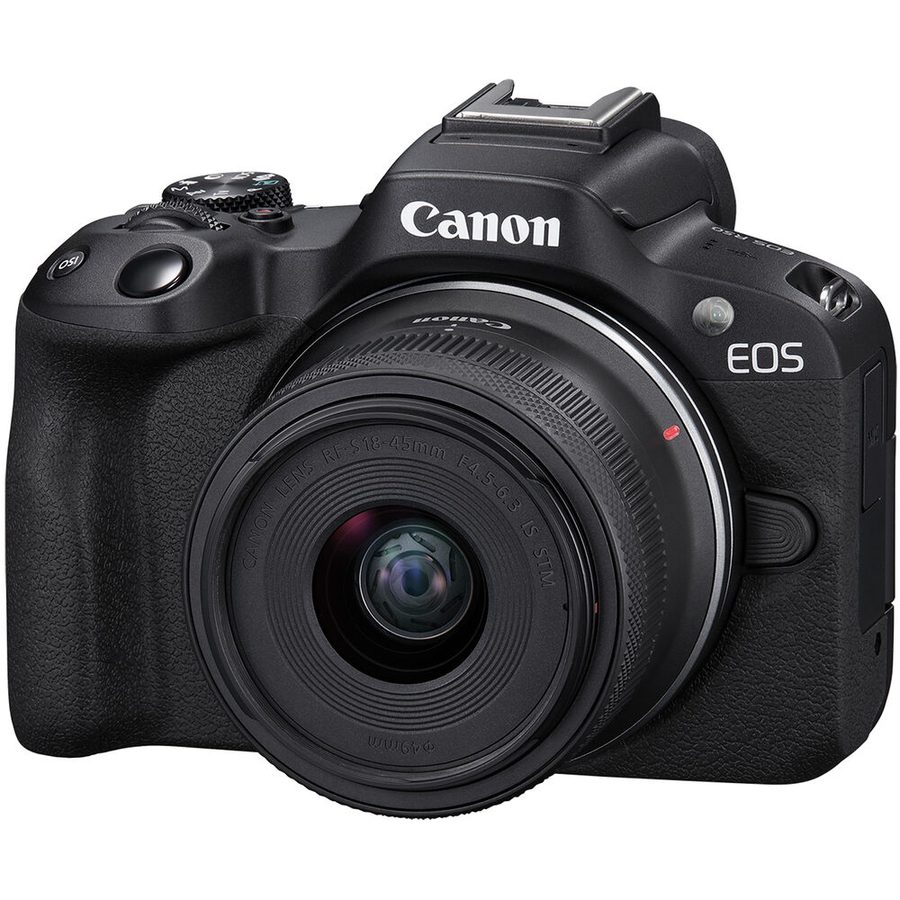
| Canon EOS R50 + RF-S 18–45 | 24.2MP APS-C | No (lens IS) | Yes (EVF) | Uncropped 4K/30; FHD 120 | ~$700–$800 (MSRP kit often ~$799–$899) | Most beginners; photo + light video |
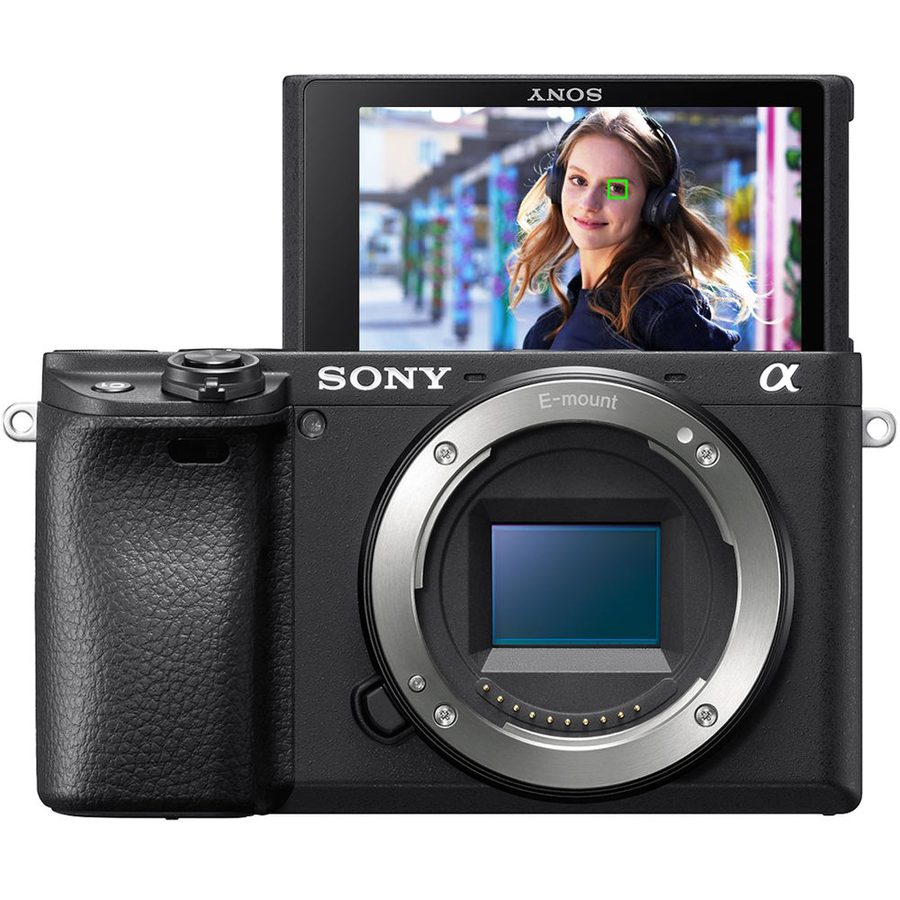
| Sony a6400 + 16–50 | 24.2MP APS-C | No (lens OSS) | Yes | 4K/30 (supersampled modes vary by firmware/settings) | ~$750–$900 | Lens ecosystem / second-lens plans |
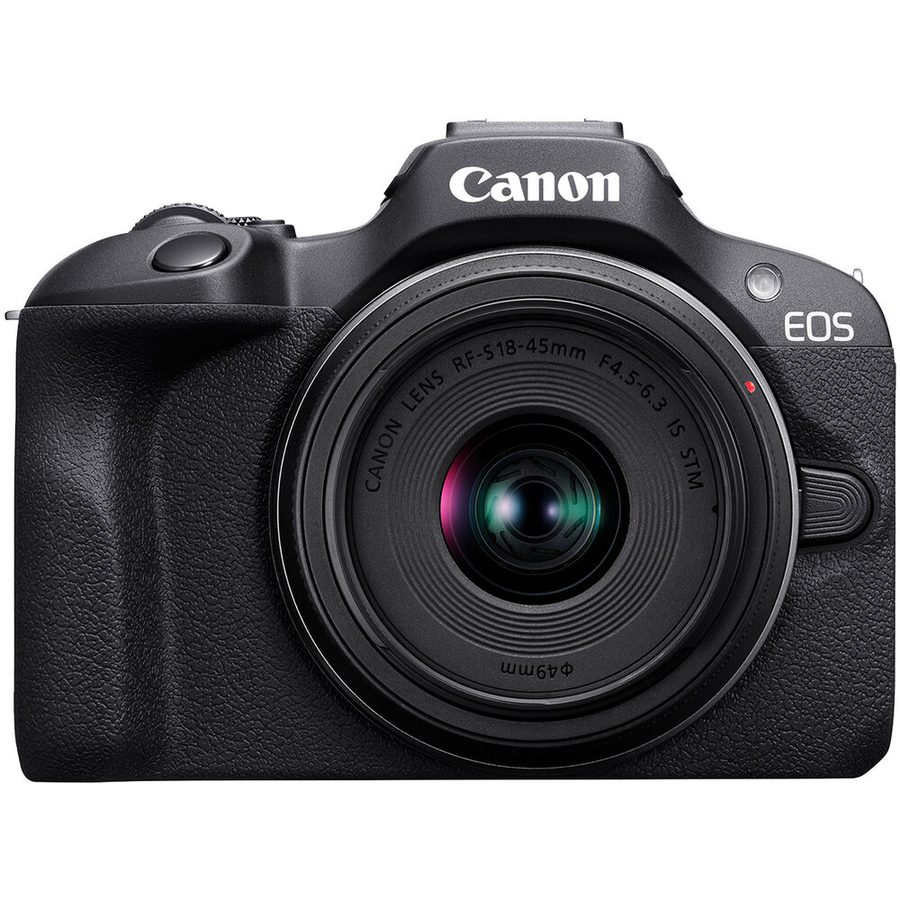
| Canon EOS R100 + RF-S 18–45 | 24.1MP APS-C | No (lens IS) | Yes | 4K with crop + slower AF than R50 | ~$550–$600 on sale | Tightest budget, stills-first |
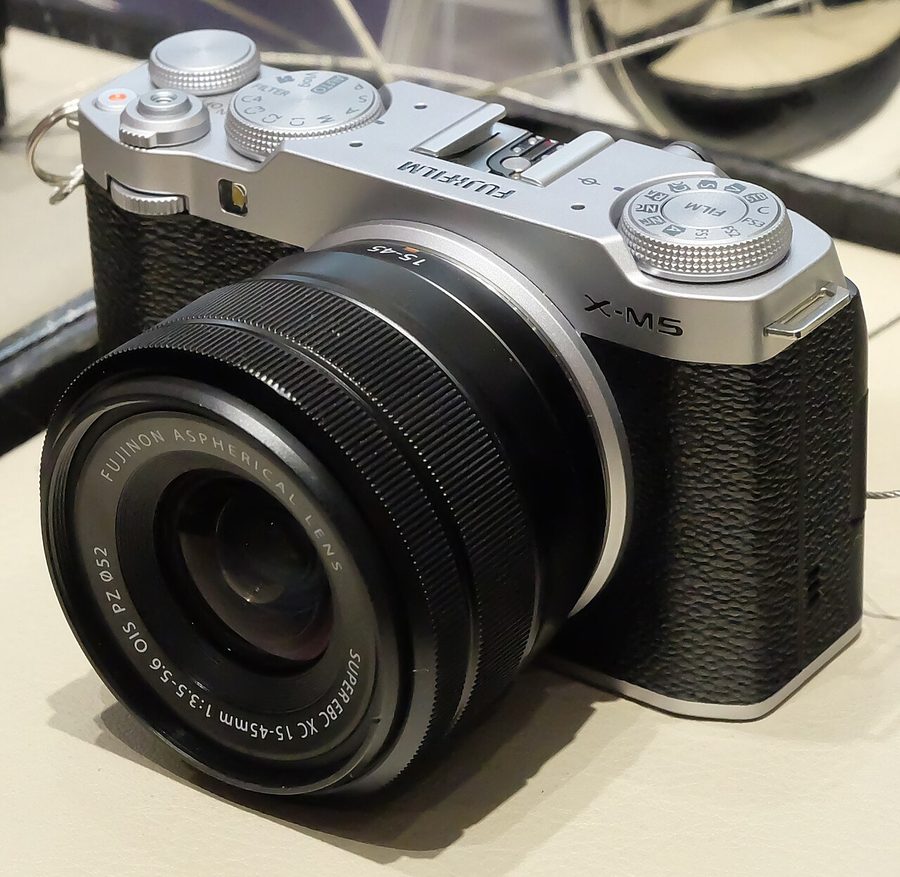
| Fujifilm X-M5 | 26.1MP APS-C X-Trans | No | No EVF (LCD) | Strong 6.2K/4K creator feature set for the size | ~$800 body; kit toward $900–$999 | Compact carry + JPEG film simulations |
Best overall: Canon EOS R50 kit
Buy this if you want one camera for family trips, pets, travel stills, and occasional vlogging without fighting the menus.
The R50 pairs a 24.2MP APS-C sensor with Dual Pixel CMOS AF II, subject detection (people/animals/vehicles), a fully articulating touchscreen, and an EVF. Kit zoom is the RF-S 18–45mm f/4.5–6.3 IS STM. There is no IBIS — keep IS lenses or raise shutter speed. Uncropped 4K/30 is the hybrid win over the cheaper R100.
Around $700–$800 for the kit on common deals (list nearer $799–$899), it remains the default beginner recommendation in 2026 roundups.
Best lens ecosystem: Sony a6400 kit
Buy this if you already know a second lens is coming within a year.
Sony E-mount has the deepest used/third-party APS-C and full-frame-compatible glass at beginner prices. The a6400’s real-time tracking and eye AF are still competitive. No IBIS; the 16–50 kit OSS helps. Video is capable but the body is older than ZV/A6700-class creators — you are buying system flexibility, not the newest Sony vlog body.
Best budget Canon: EOS R100 kit
Buy this if you need to stay near $550–$600 and mostly shoot stills.
You keep RF-S mount compatibility with the R50’s system, guided modes, and a light body. Tradeoffs versus R50: weaker video AF in 4K (cropped), no articulating touchscreen in the same way, and fewer convenience features. Fine for learning exposure and composition; upgrade later inside the same mount if video becomes central.
Best compact / JPEG color: Fujifilm X-M5
Buy this if you want pocketable APS-C with Fujifilm film simulations and creator-friendly video — and you can live without a viewfinder.
The X-M5 is tiny and fun. Body-only pricing often lands near $800; XC 15–45 kits push toward the $1,000 ceiling. No EVF means bright sun composition relies on the LCD. If you need a viewfinder, look at X-T30-class bodies (often over this budget) or stick with R50/a6400.
Recommended path
- Buy a current APS-C kit from Canon RF-S, Sony E, or Fujifilm X.
- Add a fast prime (~35mm equivalent, often $200–400) within six months.
- Ignore full-frame until you know which focal lengths you actually use.
- Budget a spare battery, 64–128 GB V30+ card, and a small bag in the same $1,000 envelope.
Verdict
| Use case | Pick |
|---|---|
| Best starter overall | Canon EOS R50 + 18–45 kit |
| Best for future lenses | Sony a6400 kit |
| Best under ~$600 | Canon EOS R100 kit |
| Best compact / JPEG fun | Fujifilm X-M5 |
| Stretch / vlog-first | Sony ZV-E10 II kit if you can clear $1,000+ |
Avoid: obscure mounts with dead roadmaps; megapixel marketing without competent AF; buying body-only with no plan for a first lens.
FAQ
Should I buy used full-frame instead?
Sometimes — check shutter count, retailer warranty, and whether you need adapters. New APS-C kits are simpler for absolute beginners who want working AF and support.
Do I need 4K 60?
Nice for slow motion; 4K 30 is enough to learn. Stabilization, AF, and audio matter more early.
Phone vs mirrorless?
Phones win convenience. Mirrorless wins depth-of-field control, low light with decent glass, and long-term skill growth.
Does the R50 have IBIS?
No. Rely on lens IS / OSS, higher shutter speeds, or a tripod. Digital movie stabilization crops the frame when enabled.